
Quick answer
Here’s the short version: You survive without losing cash by having a reserve built during peak months, by shifting your service menu away from exterior work, by pre‑selling maintenance plans during the fall, and by cutting every expense that doesn’t directly support profitable bookings. The goal isn’t just to make money, it’s to make enough cash to cover your bills so you can get back to a strong spring.
How to Survive the Auto Detailing Slow Season Without Losing Cash
The detailing slow season can drain your bank account as fast as it kills your phone. But the detailers who make it through aren't the ones who hustle harder in January, they’re the ones who treated the slow season as a cash‑flow problem all year long. This guide gives you a practical, financial‑first system to protect your income, cut your burn rate, and book work before winter arrives, or even if it’s already here.
The Slow Season Is a Cash‑Flow Problem
If you’re already in the struggle, your move is to calculate your minimum monthly burn, reactivate past customers with specific offers, look for dealer or body‑shop accounts, and take a temporary job if the gap remains.
Your profit may look great in October, but cash sits in paperwork and deposits, it’s not what pays bills. Slow season doesn’t automatically mean bankruptcy; it means your income drops while your costs stay. That’s the squeeze.
Start by pulling last year’s numbers. List your business fixed costs: rent, wireless, software, insurance, loan payments, payroll for any employees. Then list your minimum personal draw, the lowest amount you take from the business to keep your household solvent. These two totals create your monthly cash requirement.
Now build a base scenario for the slow period. How many consecutive months of lower activity do you realistically face? A common planning number is 2‑4 months, but your climate matters. If you’re in a mild region, maybe it’s 1‑2 months; if you’re in a snow‑belt, expect 3‑5 months of drastically reduced exterior customers. Don’t hold onto hope that “this year is different”. Plan for the worst you can handle.
Build a Reserve Fund Before You Need It
A dedicated slow‑season savings account is your parachute. Decide how much you must have in it before winter begins.
The formula to find your target:
Winter Survival Account
Let’s say your monthly burn is $5,000 (business + personal). If you plan for 3 tough months, that’s $15,000. Add a 10% buffer, and your target becomes $16,500.
Slow‑Season Savings Calculator
type your own numbersTarget = Monthly Cash Burn × Slow Months + 10% Emergency Buffer
Now calculate what you have to set aside each month during your good season:
Reserve Needed per Month = (Target, Current Reserve) ÷ Remaining Peak Months
If you have $4,500 saved and 4 peak months left, you’d save ($16,500, $4,500) ÷ 4 = $3,000 per month.
That’s a concrete number. It might be 10% or 40% of your income, but you’re no longer guessing. Make the transfer to that separate account automatically on the 1st and 15th. Give it a name: “Winter Survival Account.”
If you’re already in the middle of the season, do the reverse math. How much can you cover with what you have? Then immediately attack your cost structure and bring in alternatives.
Trim What’s Actually Expendable
This is a 30‑minute audit, not a week of stress. Pull up last month’s bank and credit card statements, then go line by line.
- Subscriptions & software. Any active o? (booking, invoicing, photo storage, fax, newsletter) you haven’t opened in 30 days? Cancel it. Renegotiate annual contracts if that’s allowed.
- Inventory. Raw supplies in the back drawer? Keep what you’ll actually run this winter. Stop ordering “just in case.” Use the principle of 1-in‑1‑out.
- Insurance. Don’t drop coverage, but do call your broker. Ask if your vehicle and business usage can be adjusted for the season, or whether a seasonal policy exists that matches your mileage. Never leave yourself unprotected, a winter accident or a slip‑and‑fall is worse than any savings.
- Fuel & travel. If you’re booking fewer jobs, combine routes to one area, and cancel any non‑essential monthly trips.
The result is your “winter baseline”, the minimum you need each month to keep the doors open.
Sell Winter‑Ready Services, Not “Car Detailing”
In the slow season, a generic “full detail” isn’t a message. Customers want solutions to winter’s specific problems: salt, slush, dull interior, foggy headlights.
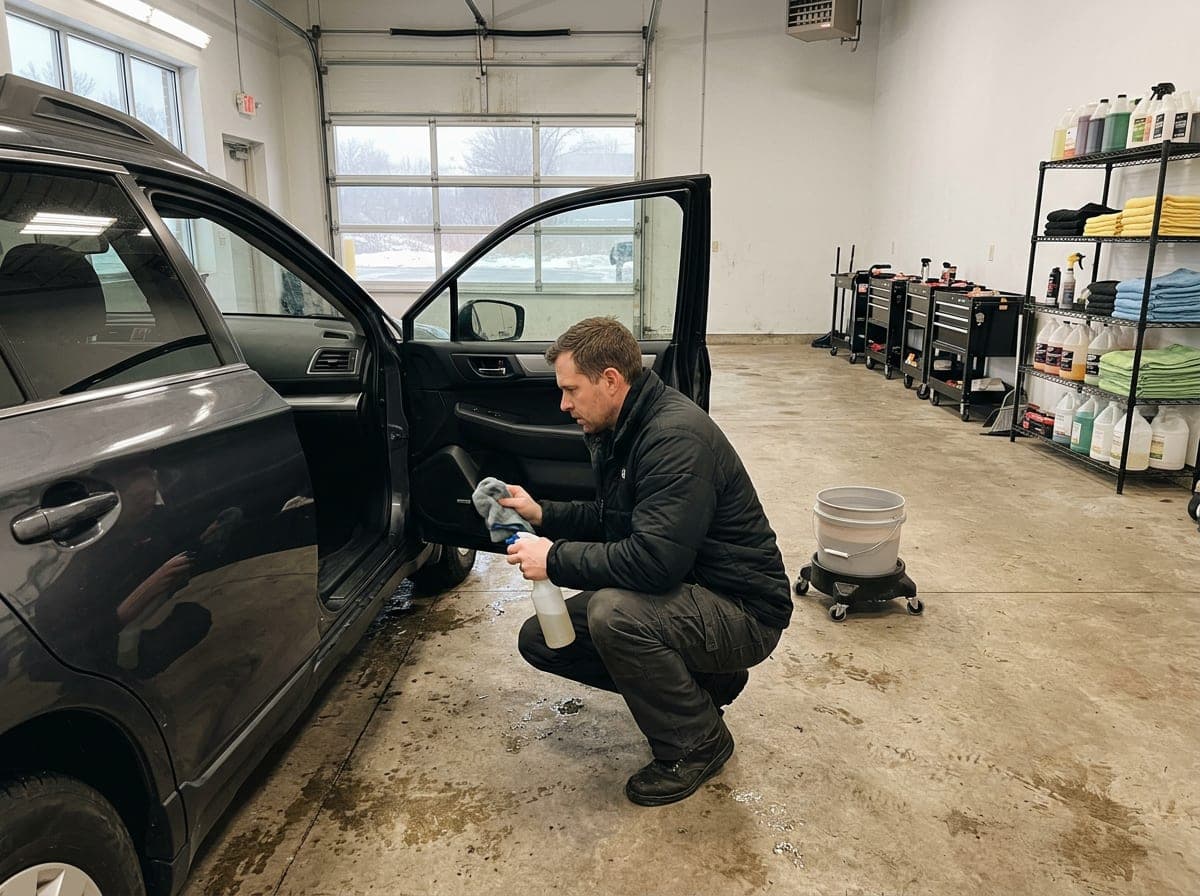
Indoor‑Only Package
- Deep interior clean & extraction
- Odor treatment & sanitizing
- Leather or fabric conditioning
- Window and mirror cleaning
- Headlight restoration service
Mild‑Weather / Mobile Package
- Rinseless or water‑free wash
- Clean the wheels & door jambs
- Spot‑clean interior and apply seat protectant
- Spray‑sealant to paint (only if the product allows for 40°F+)
Shop‑Based “Winter Ready” Package
- Full interior service above
- Rinse undercarriage to remove salt (if you can capture runoff)
- Apply clear‑protection to trim and wheels
- Exchange floor mats with an all‑weather option
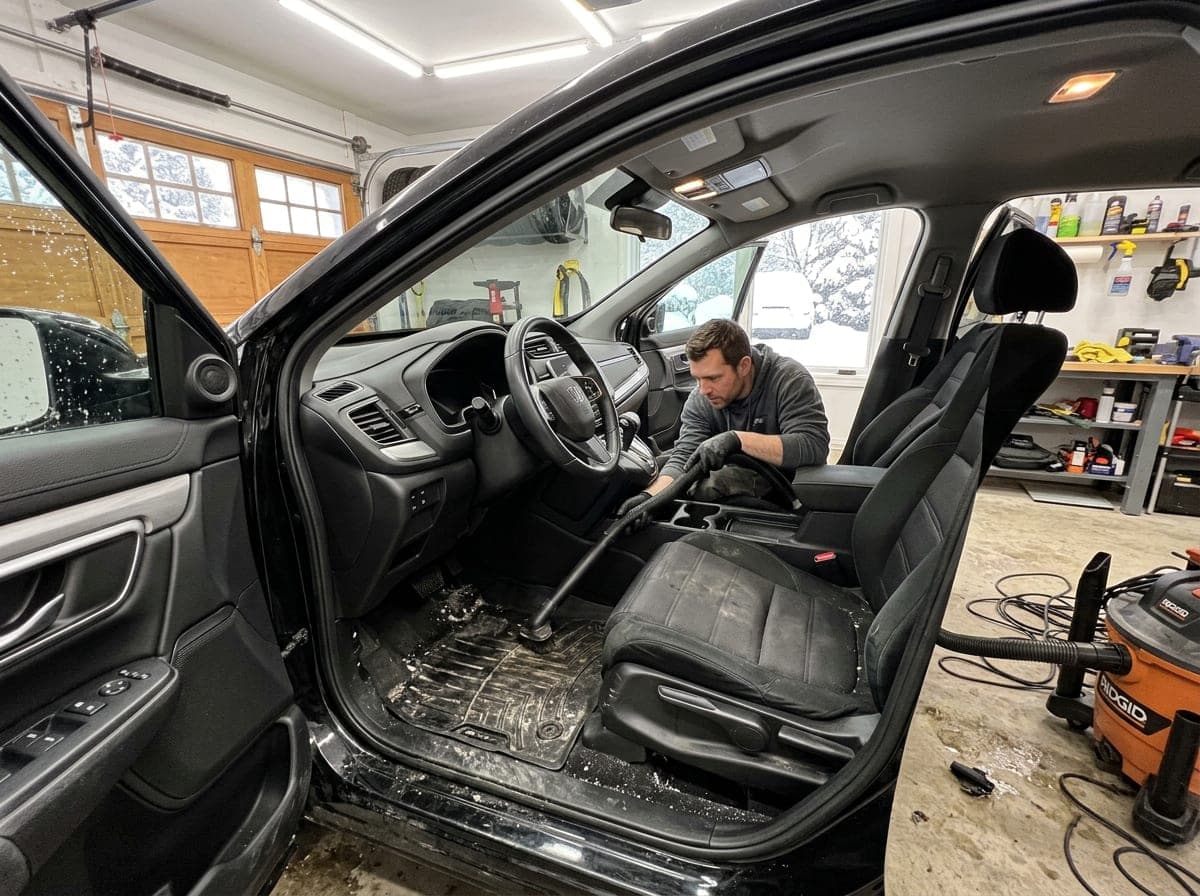
Important: Don’t bundle a service that relies on water outdoors if you’re parked in a parking lot in February. Pick the indoor services first, and set the package’s price on the contribution margin, not a guess. For example, if your indoor interior deep‑clean sells for $175 but uses $15 of supplies and $40 of labor, that’s $120 a margin, much better than a $39 exterior wash that doesn’t fit the weather.
Sell the Maintenance Plan Before the Freeze
Your strongest move isn’t winning a new search ad, it’s booking 3 to 6 visits on existing customers during October and November. When you finish the fall detail and the car is looking perfect, offer them a “Winter Seal‑Plan”:
- Structure: 3–6 visits, each 60–75 minutes, fixed scope (interior refresh, light wash, to‑top‑ups).
- Pricing: 10–15% off the regular per‑visit price, paid upfront.
- The pitch: “I’m planning my winter calendar now. I can reserve your spot for December, January, and February, each visit we’re addtively refreshing the inside and putting protection on. That’s your discount, and it protects you from the cold to even try to book later.”
If they say yes, schedule the first appointment on the spot. This converts the season from a rolling “maybe” into scheduled revenue, and it improves trust because they’ve locked in a fair price. Be clear on the cancellation policy: if bad weather forces a reschedule, they can always move to a warm date, but they don’t get a refund after 48 hours, your time was reserved.
Re-Engage Your Existing Customer List
Inactive customers are your fast path back to cash. Rule of thumb: if you haven’t seen them in 90+ days, they’re “missing in action.”
But don’t send a generic blast. Send a personal, specific message:
Subject: Your [Car Make] is winter‑minded. Body: “Hi [Name], we last took care of your [Car] in [Month], and I noticed the slush and salt have started. I’m opening a few appointments for a winter interior refresh and salt‑protection service. I can reserve one for you on [Date 1] or [Date 2]. Want me to sting you in?”
This is direct, dates a customer feels important, and it’s not “we have a special” spam. You’re asking for actions, not just awareness.
Keep track of compliance: only contact people who have consented via email or SMS, and make it ease to opt out.
When to Work and When to Stop
- When to reschedule: below 32°F consistently, wet cold, icy surfaces, or high wind. The exterior parts will freeze, your water will ice, and the customer will see shoddy work.
- If you do work outside on a marginal day: book the midday hours (11 am–2 pm), use a rinseless wash with less water, and keep product bottles warm in a container. But be honest, some days you just have to say "tomorrow."
- Landline service: Before you book outside, be sure the snow won’t refreeze. If your customer’s driveway is glazed with ice, say no politely and offer an interior-only service they can park in a garage.
Protect your gear: If you store a pressure washer or compressor, follow the manual’s winterization steps: disconnect the water, drain completely, install an approved RV antifreeze, and store your tubes and units above freezing. Check your chemical labels for storage temps, some coatings and interior products separate or alter if they receive under 50°F for a night. Always look up the exact temperature guidance before committing to outside work.
Bring in B2B Revenue Without Adding Staff
Dealer and body shop work is the winter lifeline many operators use. But don’t approach blindly.
- 1
Identify prospects
local independent lots, used, car dealerships, body shops, rental or fleet agencies.
- 2
Find the right person
ask for the used‑car manager (not the sales floor). Body shops call it “the reconditioning manager.”
- 3
Pitch short
“I handle detail and recon on a per-car basis when you’re behind. I can do a test car today or this week and give you a typed price quote by condition. What’s the best day to look at two units?”
- 4
Set terms
you’re get a signed purchase order. Don’t quote “flat”, quote per vehicle, with a range for heavy condition units.
- 5
Collect payment
make it net 15 days at most, or require COD for first the first jobs.
Commercial clients may order a handful of interior cleanups per week, which keeps cash flowing. But don’t becomes 100% dependent on one account, they may disappear as quickly as clients.
Emergency: When You’re Already Behind
If you’re reading this in January and your back is against the wall, do the 72‑hour plan now.
First 72 hours:
- Write every bill that’s due in the next 30 days. Mark what’s essential (rent, utilities, food) vs things that can wait.
- Call your lender/vendor before you miss a payment and ask for 14‑ or 30‑day extension.
- Collect every outstanding invoice by phone or simple email. Ask for cleared funds, “Apple Pay” / Zelle / wire.
- On new retail bookings, charge a 50% deposit. You’re training clients that winter reservations cost serious effort.
- Halt all discretionary spending on equipment, tool sales, or “maybe” marketing.
The next 30 days
- Re‑engage your 90‑day list with the messaged language above.
- Decide whether to take a temporary part‑time job or a snow plow route to cover the gap, you’re not a failure if you do. You’re the guy smartly stepping back to survive.
- Buy nothing unless you’ve already sold the job that pays for it.
The Sustainable Annual System
Your Own Well‑Being
Don’t underestimate the stress of a seasonal downturn. Slow weeks can leave you spiraling.
Book a day off, the slow season is the only chance you have for a two‑day break in this business. Use the quiet time to plan next year’s support, a new service, website photos, a form of outreach. Also get your accounting software entering a clean September to April.
Above all, be okay with having a few days with no key rings. The money is made in other months. Protect your mindset so you're ready to push when the snow melts.
To always survive winter without shedding cash, do these in sequence:
- 1
All year
track your monthly burn in an app.
- 2
In peak
automate 20‑30% of each job into your “Winter Reserve.”
- 3
August, Sept
audit your costs and trim generously.
- 4
Oct, Nov
sell winter‑maintenance plans, reconnect with past customers, schedule equipment winterization.
- 5
Dec, Feb
offer interior‑only packages, work the safe weather days, and chase the dealer accounts.
- 6
Any sudden gap
cut your direct costs, use the deposit rule, and isn’t afraid to take one temporary job to cover the gap.
The business doesn’t have to cost you your savings, it’s expected to be seasonal. You can run a detail shop that makes profits on non‑peak months, if you plan, you cut unseen overhead, and you sell work when the sun shines. Use this season to write down your own survival number, and it won’t beat you again. Now go protect that bank balance.