
Quick answer
You're ready to hire a second groomer when three conditions are true at the same time: you have sustained unmet demand for your services, the numbers work after accounting for all labor costs, and you have the systems and time to manage another person. Your waiting list is over four weeks long.
The decision
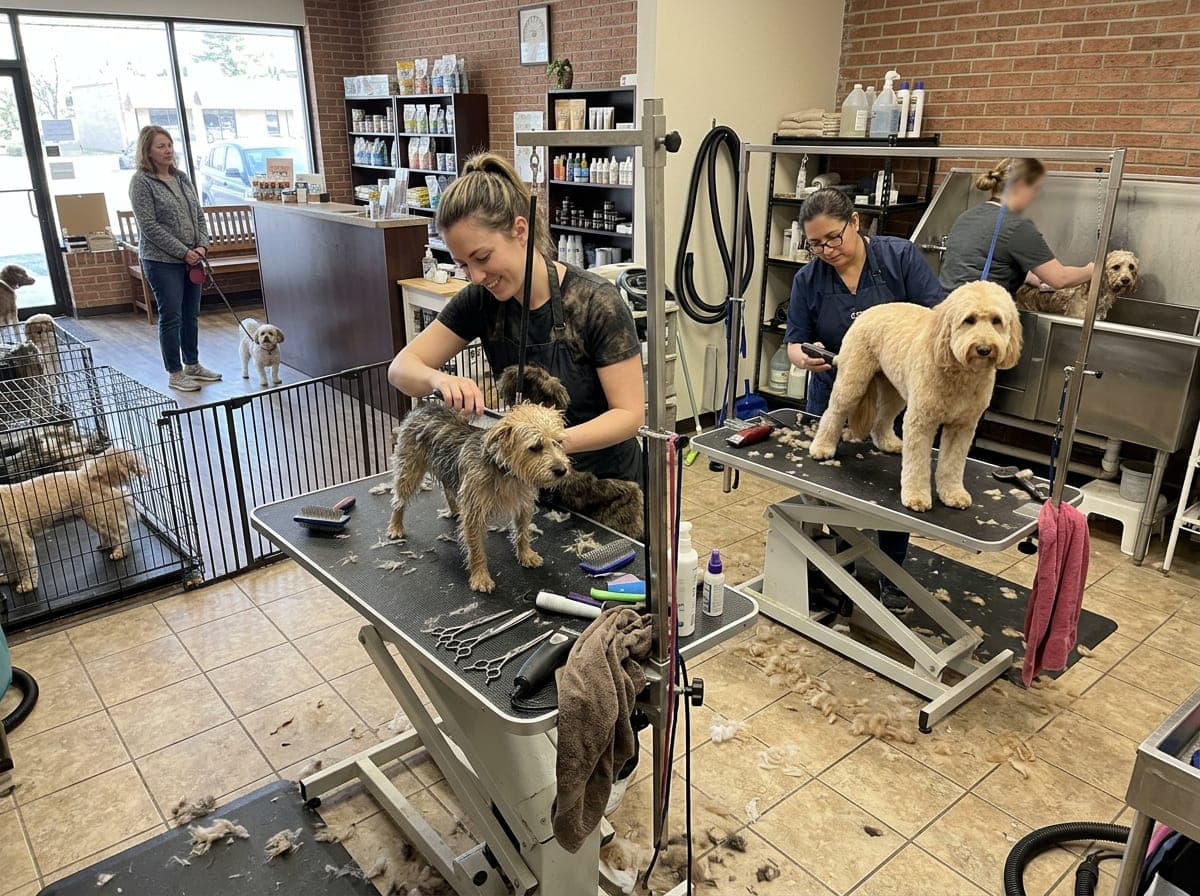
You're turning away clients. Your back hurts. You haven't taken a real vacation in two years. And you just spent another Sunday catching up on dogs you couldn't fit during the week.
Hiring a second groomer feels like a huge leap. It's a leap you should take, but only when you're genuinely ready, not just busy.
The honest truth: most solo groomers wait about a year longer than they should. The numbers are clear, the waitlist is real, but the fear of more admin, more liability, and the end of "I just do it myself" keeps them stuck.
This guide will help you figure out if you're truly ready, what it really costs, and how to make the transition without chaos.
The 7 Signs You're Ready to Hire
Not "busy." Ready. The difference matters.
- You're turning away clients weekly. Not occasionally. Not during peak season. Weekly, consistently, for months.
- Your waiting list is over four weeks long. For regular clients, not just new ones. When your established customers can't get in within a month, you have a capacity problem.
- You haven't taken a real week off in 18 months. Because closing for a week means losing thousands of dollars and clients who might not come back.
- You're running over every day. Appointments booked at 45 minutes are taking 75. You're rushing through every groom and still falling behind.
- You're declining work you actually enjoy. The complex doodles you used to love. The show-cut scissor work. You're saying no because you don't have time.
- Your body is starting to protest. Your back, wrist, or hands hurt. You can't groom nine dogs a day forever, your body will eventually make that decision for you.
- You can afford it without sweating. Your revenue could absorb the full cost of an employee plus a buffer. Not just the salary, the taxes, the tools, the training time.
The Three-Gate Readiness Test
Here's the trap: being busy isn't the same as being ready to hire. Some busy periods are structural, you've outgrown your capacity and it won't change. Other busy periods are seasonal or temporary. Hiring during a temporary spike leaves you with payroll you can't sustain when things slow down.
Before you hire, run your situation through three gates:
Gate 1: Demand
You need sustainable unmet demand. That means:
- Turning away qualified clients consistently for at least three months
- Established clients waiting more than four weeks for an appointment
- A repeatable source of new inquiries
- Demand that would survive a price increase
If your busy period is just the holiday rush or a temporary spike, you're not ready.
Gate 2: Economics
You need the numbers to work after all costs. That means:
- A cash reserve covering several months of payroll
- A realistic revenue forecast based on actual bookings, not hope
- Enough margin after wages, payroll taxes, supplies, rent, insurance, software, and refunds
- The ability to pay during training and slow periods
Gate 3: Management capacity
You need to be able to run a team. That means:
- Written service and safety standards
- A scheduling system that supports multiple groomers
- A quality-control process
- A willingness to delegate
- Time for training and feedback
You're ready only when all three gates are substantially met. A long waitlist alone doesn't mean you're ready. Neither does physical pain. Neither does a busy season.
The Real Cost of Hiring
A full-time groomer isn't just a salary. You're looking at the loaded cost: gross pay plus employer contributions, benefits, holidays, and tools.
Here's what to include in your calculation:
- Gross wages or commission
- Employer payroll taxes and contributions
- Benefits and paid leave
- Supplies and equipment
- Insurance
- Training payroll
- Recruiting costs
- Your own lost production during training
- Additional rent or utilities if needed
The key number isn't revenue, it's contribution margin. Here's the formula:
Required monthly sales = loaded monthly employment cost ÷ expected contribution margin
Let's walk through an example. Say your loaded cost for a groomer is $4,000 per month. You expect the groomer to produce $6,000 in monthly sales. Your contribution margin, what's left after wages, supplies, processing fees, and other variable costs, might be 50%. That means you need $8,000 in new sales just to break even on the hire.
Required monthly sales
The math has to work before you commit.
Hiring revenue floor calculator
type your own numbersThe math has to work before you commit.
Know Your Bottleneck
Before hiring a second groomer, figure out what's actually limiting your business. The right solution depends on the bottleneck:
| Bottleneck | Solution |
|---|---|
| Haircutting capacity | Hire a second groomer |
| Bathing and drying time | Hire a trained bather or assistant |
| Phone intake and scheduling | Add reception help or automated booking |
| Low margins | Raise prices and redesign services |
| Schedule chaos | Fix time estimates and policies |
A second groomer doesn't automatically double your capacity. If you're drowning in bathing and drying, a bather might be the smarter first hire. If you're losing leads because nobody answers the phone, that's a different problem entirely.
5 Alternatives to Consider First
Before you hire a second groomer, consider these options. They might solve your capacity problem with less risk.
- Raise your prices. This should be one of the first levers you pull, not the last. If you're booked out for weeks, test a meaningful increase. Review your pricing per service, not just across the board. Add policies for coat condition, large dogs, and no-shows. Your clients spend more on coffee each day.
- Restrict services or client types. Stop taking large dogs. Require double-coated breeds to come every 12 weeks or lose their spot. Refuse disrespectful clients. You don't have to serve everyone.
- Hire a bather or assistant first. This is a lower-risk first step. A trained bather can handle bathing, drying, and cleaning while you focus on haircuts. Just remember: bathing and drying are skilled tasks. Poor technique creates coat damage, skin irritation, and longer grooming times.
- Expand hours strategically. Open one evening a week or a Saturday. The property is already paid for. Just make sure you're not working more than 40 hours yourself.
- Move to a membership model. Clients pay monthly for a guaranteed spot. This creates predictable revenue and reduces no-shows. But memberships also create obligations around reserved capacity and cancellations. They work best when you have the scheduling flexibility to honor them.
One-on-One vs. Shared Workflow
Your business model affects whether a second groomer makes sense.
One-on-one model: You groom each dog from start to finish before accepting another. This is more personalized, but it's harder to share bathing, drying, and reception labor. A second groomer may require a near-duplicate setup.
Flexible or batch workflow: Dogs can be bathed, dried, crated safely, and finished in a coordinated flow. This allows bathers and dryers to work efficiently and groomers to focus on high-skill haircutting. It requires stronger safety systems, records, and communication.
If you're strictly one-on-one, hiring a second groomer might not create the efficiency you expect. You might just be paying someone to work in parallel with you.
Compensation Models
How you pay your second groomer matters. Here are the options:
Commission (typically 40–55%)
Groomers earn a percentage of what they produce.
- Pros: Direct link between performance and pay. Motivates productivity.
- Cons: Income varies week to week. Can encourage rushing. Slower periods affect morale.
- Best for: Experienced groomers who want earning potential and autonomy.
Hourly ($15–$30+ depending on location)
- Pros: Predictable income. Easier budgeting. Works for mixed duties.
- Cons: Less incentive for speed. Requires time tracking. Can feel limiting for high producers.
- Best for: Bathers, assistants, trainees, or hybrid roles.
Salary ($30,000–$60,000+ depending on role)
- Pros: Predictable payroll. Simple structure.
- Cons: No direct tie to productivity. Can feel unfair to top performers.
- Best for: Managers, lead groomers, or admin-heavy roles.
Hybrid models (hourly base plus commission, or salary with bonuses) can work well but add complexity.
Whatever model you choose, clarify the details: Is commission calculated before or after discounts? Are tips kept by the groomer? Who pays for sharpening and tools? How is training paid? What happens during cancellations?
Employee vs. Independent Contractor
This matters legally. Calling someone a contractor doesn't make them one.
If you control the person's schedule, prices, services, methods, tools, client assignments, and workplace, the relationship likely looks like employment. Misclassification can lead to back taxes, penalties, wage claims, and workers' compensation problems.
A genuine independent business controls its own work, pricing, schedule, tools, and client relationships. It may pay rent or a clearly structured fee for space.
Before choosing a structure, consult a payroll professional or employment attorney in your area. This isn't something to guess about.
Finding the Right Person
Experienced groomers are rarely unemployed and waiting. The industry faces a genuine shortage, which affects your timeline and your hiring proposition.
A strong groomer may already have a full book of clients, a desirable commission arrangement, and flexible hours. To compete, you'll need more than pay:
- Predictable scheduling
- Quality tools
- Safe working conditions
- Paid time off
- Health benefits where feasible
- Education and continuing training
- Autonomy and respect for professional judgment
- A clear client-book policy
- A manageable dog load
Where to look:
- Your professional network
- Grooming schools and apprenticeships
- Facebook grooming groups
- Industry job boards
- Word of mouth
What to look for:
Technical skills matter, safe handling, clean work, breed knowledge, efficient workflow. But character matters more. Look for genuine care for animals, reliability, openness to feedback, and calm under pressure.
Red flags:
- Excessive criticism of former employers
- Blaming dogs for every challenge
- Defensive attitude
- Unrealistic compensation expectations
Ask candidates about their approach to matted coats, aggressive dogs, senior pets, nicks and incidents, client complaints, and emergency procedures.
The First 90 Days
Most first hires fail during onboarding, not hiring. Here's a structure that works:
- 1
Days 1–14
They shadow you for two days. Then they take simple bookings, bath and tidy, small dog full grooms, with you in the room. Daily 15-minute debriefs at the end of the day.
- 2
Days 15–45
They handle their own clients with specific complexity limits. No de-matting, no aggressive dogs. Review every appointment for the first two weeks. Introduce them to clients personally, don't just add them as "new groomer" on the booking page.
- 3
Days 46–90
They're grooming independently across most of the schedule. You're pulling back on shadow reviews. Start handing over specific clients as "theirs."
At 90 days: Have a formal check-in. How do they feel? How do clients feel? How do the numbers look?
Track measurable targets: average groom time, rebooking rate, client satisfaction, safety incidents, redo rate, revenue per scheduled hour, attendance.
Experienced vs. junior hires: An experienced groomer might be productive within several weeks. A junior groomer may need months of supervision. A trainee or apprentice could take six to twelve months to reach full productivity. Adjust your expectations and your financial planning accordingly.
Managing Client Transitions
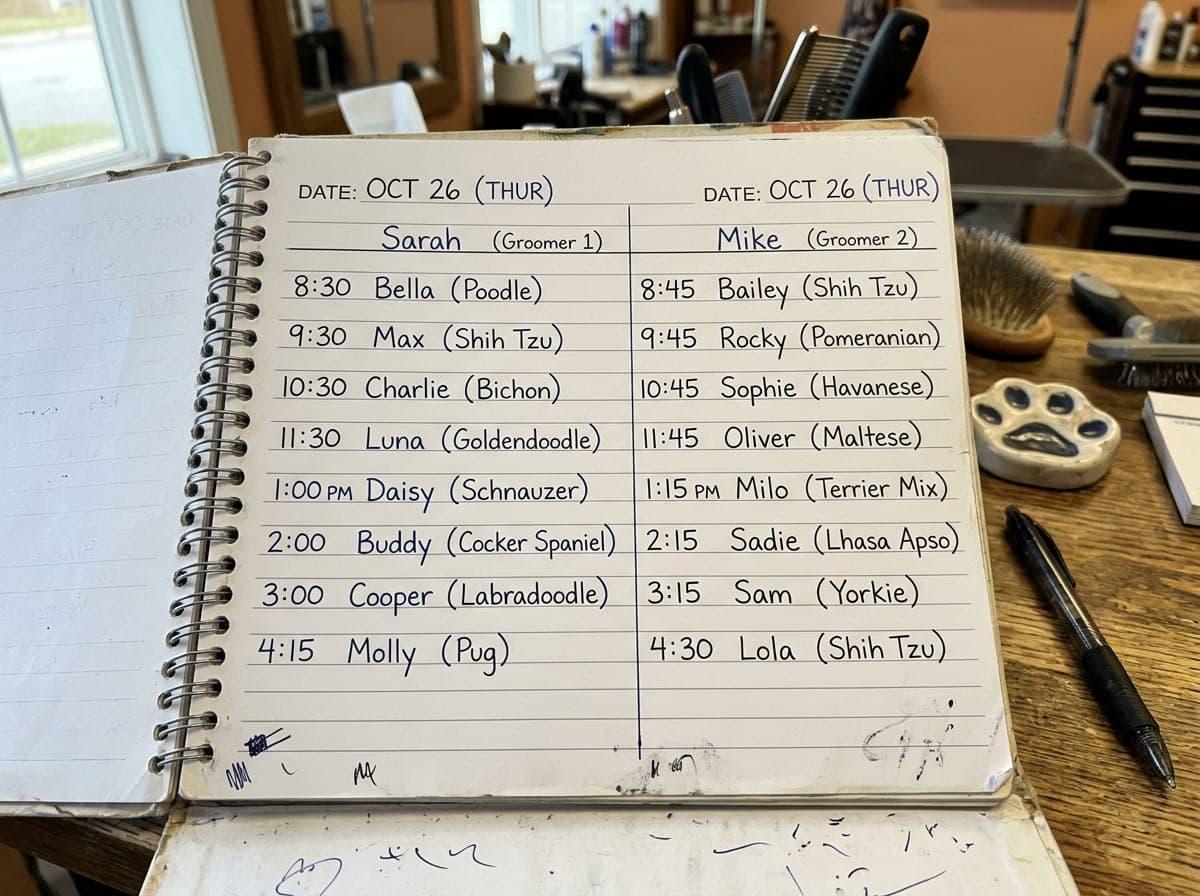
A second groomer can trigger client resistance, especially when clients identify strongly with you. Here's how to handle it:
- Tell clients before the appointment, not at pickup
- Explain the new groomer's strengths
- Offer a choice where practical
- Start with clients who are open to trying someone new
- Have the owner perform the first handoff
- Record the client's preferences in shared notes
- Avoid promising that the original groomer will always remain available
- Monitor complaints and rebooking rates
Some clients will follow a departing groomer if things don't work out. That's a business risk you accept when you build a team.
When It's Not Working
Some hires fail. It happens. The key is knowing when to cut your losses.
Signs it's not working:
- You're constantly fixing their mistakes
- Clients are complaining
- They're not improving despite feedback
- You dread going to work
If clear expectations, feedback, and improvement opportunities haven't worked, it's time. Terminate respectfully. Pay what's owed. Move forward.
Before you hire, set up the conditions for a clean exit:
- Written expectations and a defined review period
- Documentation of performance or conduct problems
- Compliance with local employment law
- A plan for keys, tools, passwords, and client records
- A communication plan for affected clients
- A cash reserve for replacement and lost revenue
Have a financial buffer to cover the drop in income. And know that some clients will leave with them. That's okay. You don't want clients who don't want to be there.
The Bottom Line
Hiring your first team member is not a leap. It's a series of small, specific decisions made in the right order.
The hardest part is deciding the business is genuinely ready. The rest, recruiting, selection, onboarding, and management, is a set of steps that, done with care, lead to a salon with room to breathe for the first time in years.
Here's your decision tree:
- If you have sustained demand, the numbers work, and you're ready to manage → Hire a second groomer
- If you're drowning in bathing and drying → Hire a trained bather first
- If you're busy but margins are thin → Raise prices and redesign services
- If demand is temporary or uncertain → Wait and build a stronger reserve
If you're consistently turning away work, can afford fair pay through the ramp-up period, and are ready to manage rather than just groom, you're ready.
Your future self, the one with a healed back and an actual vacation, will thank you.